

October 2024 Vancouver Real Estate Review

Welcome to your review of Metro Vancouver’s real estate market for October. Last month brought significant movement in Metro Vancouver’s real estate market. New listings continued to pour in, pushing total inventory to a level 26.2% above the 10-year average.The inventory would have been even higher if not for the pick up in sales activity. Sales, which had been 26% below the 10-year average, recovered to just 5.5% below the average—a notable turnaround. This rebound in sales has reversed the downward trend of the sales-to-active listings ratio, which had been declining for the past six months. This ratio is a measure of relative demand. The higher it is, the greater the relative demand. This ratio increased across all property types, signaling a potential stabilization—or even
Read More »

When Will We Get Affordable Housing?

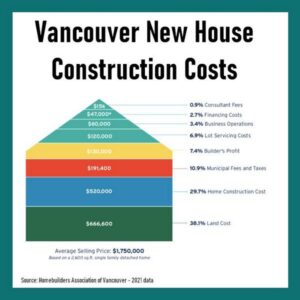
The conversation around affordable housing is often simplified to one issue: we’re not building enough. The assumption is that if we build more, the problem will be solved. But the real question is, who is supposed to build it? Right now, many people aren’t buying what’s being built, and some projects are being pulled entirely. Developers are feeling the strain, with some even facing foreclosure. A recent survey by the Canadian Home Builders’ Association showed negative sentiment for eight consecutive quarters, with most members attributing it to high interest rates. In fact, 61% of builders plan to construct fewer homes in 2024 than in 2023, with many slashing their estimates by half. At the same time, report after report highlights the number of housing units that

Read More »

Lower Rate = Slowing Economy = Rising Unemployment = Trouble

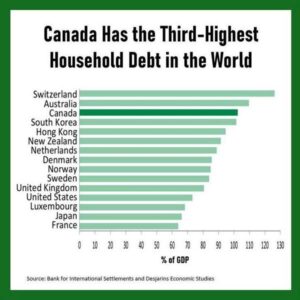
The Canadian economy is weakening, and that’s why interest rates are being lowered. While this may be good news for homeowners hoping for a break on their variable-rate mortgage payments, it’s adding financial pressure for many. Canada is already one of the most indebted countries in the world and the rise in unemployment is making matters worse. Although part of the unemployment increase can be attributed to more people entering the job market, the fact remains that more individuals are losing their jobs. Despite alarming headlines about rising credit delinquencies, the actual numbers remain low compared to other countries and our own historical standards. This may not pose a serious threat to the overall economy, but for those affected, it’s a personal crisis. Unmanaged debt

Read More »

September 2024 Vancouver Real Estate Review

Welcome to the review of Metro Vancouver’s real estate market for August. I hope everyone enjoyed their Labour Day long weekend. Sales activity remained slow in August, coming in 26% below the 10-year seasonal average. However, new listings also slowed, so the total inventory remained relatively unchanged from last month, sitting at 20.8% above the 10-year average. The sales-to-active listings ratio for all categories dropped again month over month. The sales-to-active listings ratio is a measure of supply and demand. Falling ratios indicate downward pressure on prices. As you can see from the table below, prices have been decreasing in all categories over the past few months, though the decline seems to be slowing compared to the previous month. The Bank of Canada recently lowered

Read More »

July 2024 Vancouver Real Estate Review

Welcome to the review of Metro Vancouver’s real estate market for July. I hope everyone in BC enjoyed their BC Day long weekend. Real estate sales continue to be weak in an environment of increasing inventory. However, the sales numbers actually improved over last month on a 10-year seasonal basis. While June was 23.6% below the 10-year seasonal average, July was only 17.6% below. Despite this improvement, inventory is building faster than sales. As a result, the total number of properties listed for sale increased from 20.3% above the 10-year seasonal average to 21.5% above. Inventory is now 39.1% higher than in July of last year. This increase in inventory has led to a drop in both the sales-to-active listings ratio and the benchmark price

Read More »

What is the Impact of the New 30 Year Amortization?

Did you know that starting August 1, 2024, lenders in Canada will be able to offer 30-year amortizations for insured mortgages to first-time home buyers purchasing a new build? This change is part of a government initiative to help Canadians with less than a 20% down payment buy a home. Insured mortgages allow buyers to put down less than 20% of the purchase price by paying an insurance premium that covers losses in case of mortgage default. Will This New Program Impact the Market and Help You Qualify?This new program is specifically designed for certain buyers and sellers. To qualify, the property’s price must be under one million dollars, which can be limiting in markets like Vancouver. Additionally, pre-sale condo purchases typically require a 15%

Read More »

Consequences of Banking out of a Purchase

Some people change their minds after signing a contract to purchase a home when they see that the market has dropped. They feel that since the property is not worth as much now, they shouldn’t be paying more than the current market price. However, when you sign on the dotted line, the contract is binding. What are the consequences of not completing a signed contract? The seller can sue for losses based on the original selling price of your purchase agreement. If the seller sells the property for less than the price on the original contract, they can sue the would-be buyer for the price difference. In a recent case, the would-be buyers submitted an unconditional offer, only to later claim they could not secure

Read More »

Invest in Real Estate or the Stock Market?

Recently, BMO published a report stating that the S&P/TSX outperformed Canadian real estate over the past 20 years. According to the report, the TSX achieved an average annualized return of over 7.9%, compared to 5.7% for real estate in an average inflation environment of 2.2%. While the article implies that equities might be the better option based on recent price movements, focusing solely on recent returns is a bad investment strategy. You need to look at the big picture. Long term. The report used an average of all residential real estate across Canada, encompassing cities like Vancouver and Toronto, but also smaller towns like 100 Mile House and Spuzzum. Since you cannot buy this “average house”, you need to look at the historical return of

Read More »

June 2024 Vancouver Real Estate Review

Welcome to the review of Metro Vancouver’s real estate market for June. This month’s sales and inventory numbers are quite similar to last month. Sellers seem to anticipate an increase in sales activity due to the Bank of Canada’s overnight rate finally dropping. Consequently, they are putting their houses up for sale. However, buyers seem to feel that the 0.25% drop in the rate isn’t significant enough. As a result, sales remain 23.6% below the 10-year seasonal average, while inventory is 20.3% above the 10-year seasonal average. The sales-to-active listings ratio continues to decline across all categories, leading to a drop in benchmark prices. This ratio measures supply and demand; a 20% ratio means that 20 units are sold for every 100 units in inventory

Read More »